

Searching for “relationship counseling near me” often happens at a pivotal moment, when communication has broken down, trust feels shaky, or you simply want to strengthen your bond before small issues become big ones. Whether you’re navigating conflict with a long-term partner or working through challenges in a newer relationship, finding the right therapist can make all the difference.
But with so many options available, knowing where to start can feel overwhelming. Should you prioritize insurance coverage or therapeutic approach? Is online counseling as effective as in-person sessions? These questions matter, and getting clear answers helps you make a confident choice.
At Clear Life Happiness, we believe that investing in professional support is one of the most meaningful steps you can take for your relationship. This guide walks you through exactly how to find a qualified counselor near you, from understanding different therapy methods to evaluating costs and booking your first appointment.
What relationship counseling is and who it helps
Relationship counseling (also called couples therapy or marriage counseling) is a structured form of therapy where you meet with a licensed professional to address challenges in your romantic relationship. Your counselor creates a safe space where both partners can express feelings, identify patterns causing conflict, and develop skills to communicate more effectively. Sessions typically last 50 to 90 minutes and occur weekly or biweekly, depending on your needs and the therapist’s approach.
Types of relationship counseling you’ll encounter
Different therapists use different methods, and understanding these approaches helps you choose the right fit for your situation. Emotionally Focused Therapy (EFT) focuses on attachment bonds and emotional connection between partners, working to identify negative interaction cycles and rebuild secure attachment. The Gottman Method relies on research-based interventions that strengthen friendship, manage conflict productively, and create shared meaning in your relationship.
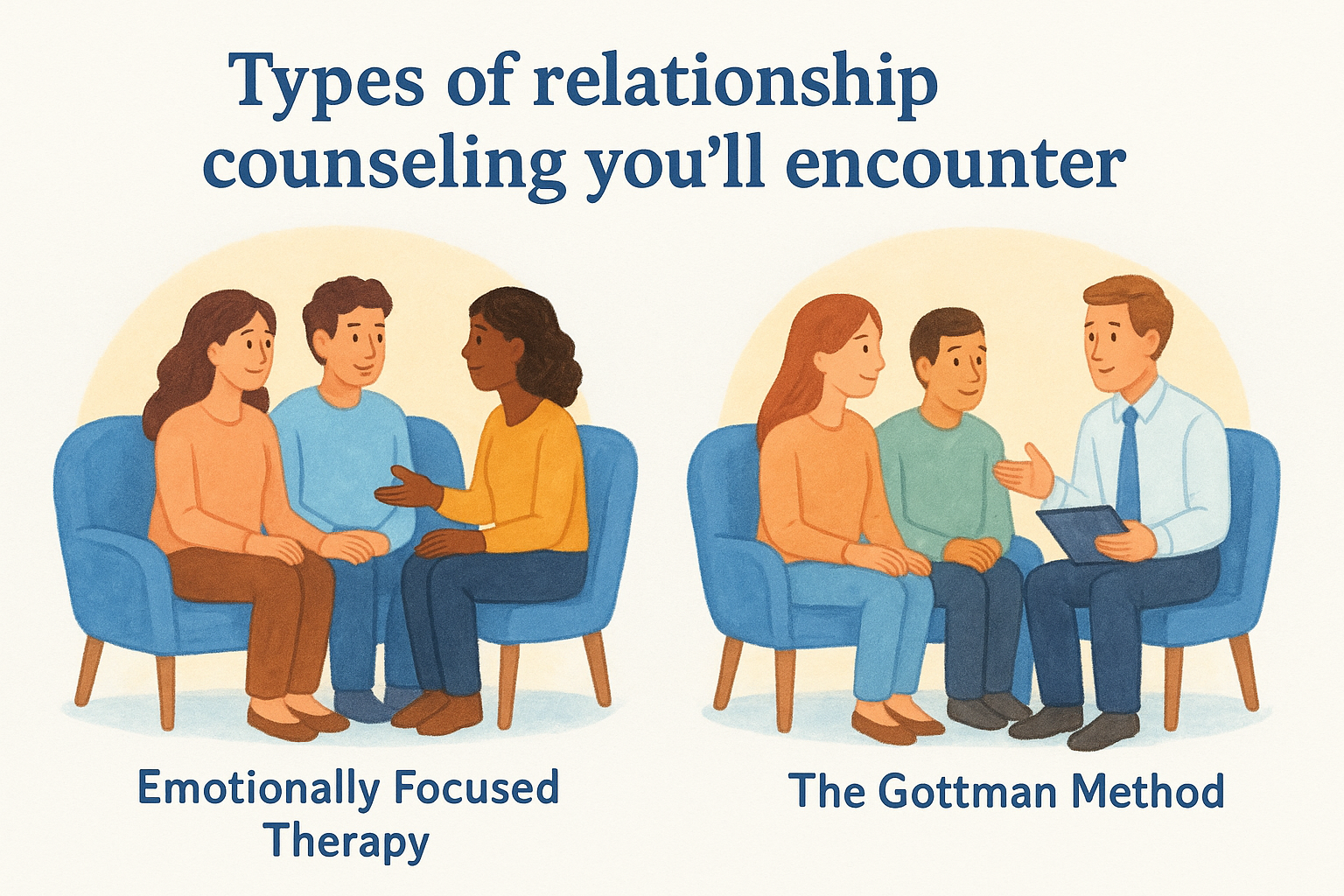
Cognitive Behavioral Therapy (CBT) for couples addresses how thoughts influence behaviors and emotions, teaching you to reframe negative patterns and develop healthier responses to stress. Imago Relationship Therapy helps partners understand childhood wounds affecting current dynamics, while Narrative Therapy examines the stories you tell about your relationship and rewrites them collaboratively.
Common reasons people seek counseling
You don’t need to wait for a crisis to benefit from professional support. Communication breakdown ranks as the most frequent reason couples schedule their first session, particularly when conversations escalate into arguments or one partner withdraws completely. Trust issues following infidelity or betrayal require specialized guidance to process pain, rebuild safety, and decide whether reconciliation feels possible.
Financial stress creates tension in many relationships, especially when partners have conflicting money values or spending habits. Parenting disagreements, whether about discipline styles or division of childcare responsibilities, often surface as couples navigate the demands of raising children together. Sexual intimacy concerns, including mismatched desires or unresolved trauma, benefit from a counselor’s neutral perspective and evidence-based strategies.
When you search for “relationship counseling near me,” you’re taking a proactive step that many couples delay until problems feel insurmountable.
Life transitions like career changes, relocation, or retirement can strain even strong partnerships. Blended family dynamics present unique challenges that require intentional navigation and boundary-setting. Some couples also seek premarital counseling to establish healthy patterns before marriage or to address concerns about compatibility.
Who benefits from relationship therapy
Counseling works for couples at any relationship stage, from newly dating partners to those married for decades. You benefit most when both people enter with openness to change and willingness to examine their own contributions to problems. Same-sex couples, polyamorous partnerships, and non-traditional relationships find support from therapists trained in diverse relationship structures.
Individual partners sometimes attend counseling when their significant other refuses to participate. While couples therapy requires both people’s engagement for maximum effectiveness, discernment counseling helps you decide whether to stay together or separate. Singles recovering from past relationship trauma also use individual therapy to develop healthier patterns before entering new partnerships.
Your relationship doesn’t need to be in crisis for counseling to help. Preventive therapy strengthens already-good relationships by improving skills, deepening emotional intimacy, and addressing small concerns before they grow. Couples preparing for major decisions like having children, starting a business together, or caring for aging parents use counseling to align expectations and build a shared plan forward.
Step 1. Get clear on what you want help with
Before typing “relationship counseling near me” into a search engine, you need to define your specific concerns clearly. Knowing what you want to address helps you find a counselor with the right training, choose appropriate therapy methods, and communicate your needs effectively during initial consultations. Vague goals like “fix our relationship” make it harder to measure progress or determine if a therapist’s approach matches your situation.
Questions to ask yourself
Start by identifying the primary issue causing you to seek help. Ask yourself whether communication has deteriorated to the point where conversations turn into fights or silent treatment. Consider if trust has been damaged through infidelity, dishonesty, or broken promises that haven’t healed. Examine whether intimacy problems (physical, emotional, or both) have created distance between you and your partner.
Think about whether external stressors like financial pressure, parenting conflicts, or work demands are overwhelming your relationship. Determine if past trauma or mental health concerns in one or both partners are affecting your connection. Decide whether you’re seeking preventive support to strengthen an already-solid relationship or need intervention to address active dysfunction.
Specificity about your challenges helps therapists tailor their approach to your actual needs rather than generic relationship advice.
Map your specific concerns
Write down the top three issues you want to address in counseling, ranking them by urgency or impact. For each concern, note specific examples that illustrate the problem. If communication is your focus, describe what happens when you try to discuss difficult topics (raised voices, withdrawal, blame patterns, stonewalling). If intimacy feels lacking, identify whether the issue involves frequency, emotional connection, physical satisfaction, or unspoken resentments.
Document how long each problem has existed and whether it’s getting worse or remaining stable. Identify any attempts you’ve already made to resolve these issues and what happened. This information becomes valuable when you contact potential counselors, helping them assess whether they have relevant experience with your particular challenges and can offer appropriate treatment approaches.
Use this template to organize your thoughts:
Concern #1: [Specific issue]
How it shows up: [Concrete examples]
Duration: [Weeks/months/years]
Impact level: [Low/Medium/High]
Concern #2: [Specific issue]
How it shows up: [Concrete examples]
Duration: [Weeks/months/years]
Impact level: [Low/Medium/High]
Concern #3: [Specific issue]
How it shows up: [Concrete examples]
Duration: [Weeks/months/years]
Impact level: [Low/Medium/High]
Step 2. Build a shortlist of counselors near you
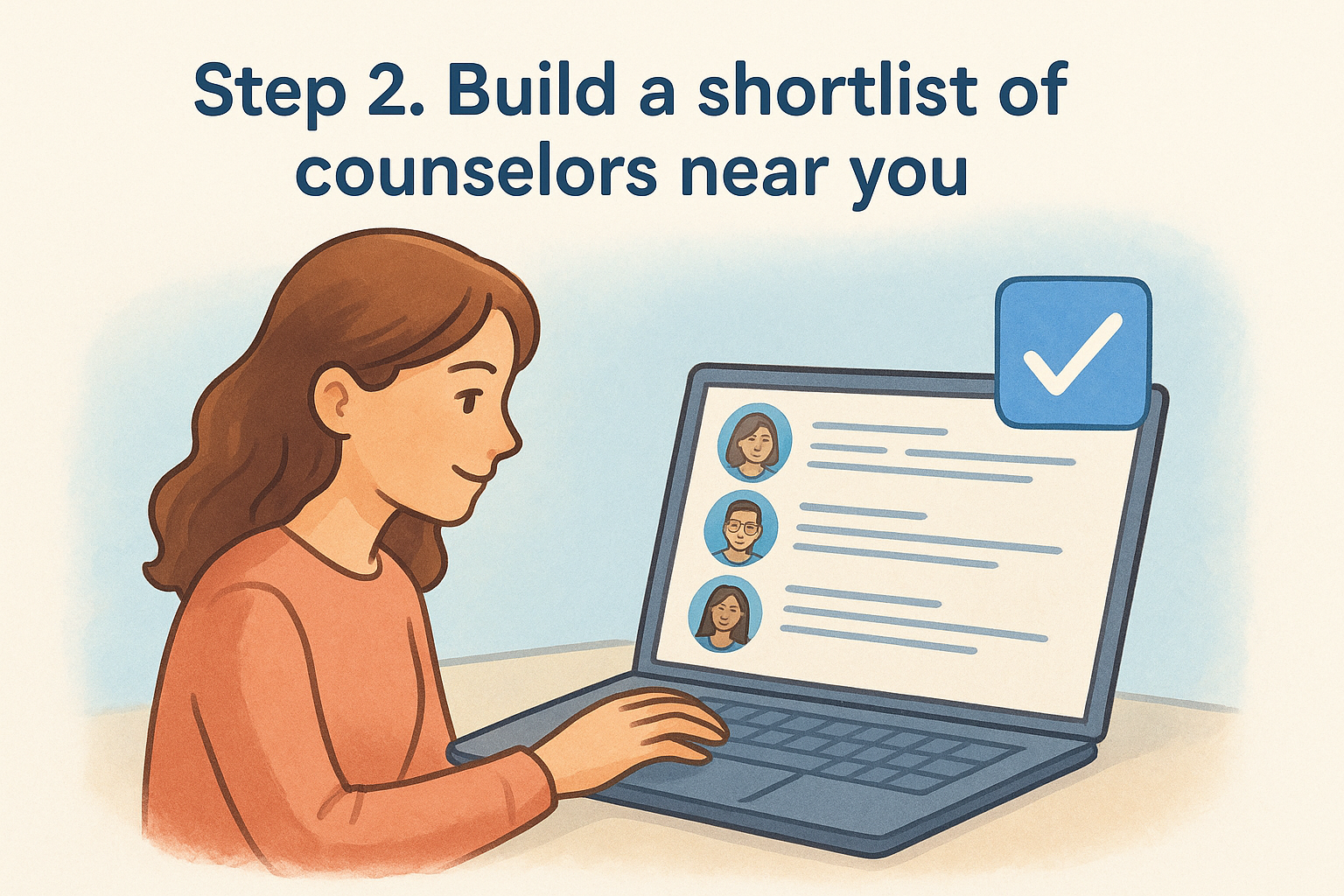
Once you’ve clarified your specific concerns, you can start building a list of qualified therapists who practice in your area or offer virtual sessions. Your goal isn’t to find the perfect counselor immediately but to identify five to ten candidates worth contacting for consultations. This shortlist approach lets you compare options, ask questions, and make an informed decision rather than booking with the first therapist you discover.
Use online directories and therapist databases
Start your search with Psychology Today’s therapist directory, which lets you filter by location, insurance, specialty, therapy method, and therapist demographics. You can search for “relationship counseling near me” and then narrow results by specific concerns like infidelity recovery, premarital counseling, or LGBTQ+ relationships. Each profile shows the therapist’s photo, credentials, treatment approach, accepted insurance, and fees, along with a personal statement explaining their philosophy.
TherapyDen offers similar filtering with a focus on inclusive, social justice-oriented practitioners. GoodTherapy provides detailed profiles and lets you message therapists directly through their platform. The American Association for Marriage and Family Therapy (AAMFT) maintains a directory of licensed marriage and family therapists who meet specific educational and clinical requirements. Your insurance company’s provider directory lists in-network therapists, which can significantly reduce your out-of-pocket costs.
Ask for referrals from trusted sources
Personal recommendations often lead you to high-quality therapists who have helped people with similar challenges. Ask your primary care doctor if they refer patients to relationship counselors they trust. Check with close friends or family members who have attended couples therapy, understanding that their experience reflects their particular situation and personality fit rather than guaranteeing the same results for you.
Contact your employee assistance program (EAP) if your workplace offers one, as they typically provide free initial sessions and vetted referrals. Religious or spiritual advisors often maintain connections with faith-compatible counselors if that matters to you. Local community mental health centers can refer you to affordable options, including sliding scale practitioners who adjust fees based on income.
Building a shortlist of five to ten counselors gives you enough options to compare without overwhelming your decision-making process.
Compile your shortlist with key details
Create a simple spreadsheet or document listing each potential counselor’s name, contact information, specialties, accepted insurance, session fees, availability, and whether they offer in-person or virtual appointments. Note any specific qualifications that caught your attention, such as advanced training in infidelity recovery or experience with blended families. This organized approach helps you track which therapists you’ve contacted and compare their responses when you begin reaching out.
Step 3. Check credentials, specialties, and therapy style
After narrowing your list, you need to verify each therapist’s qualifications and determine whether their approach fits your situation. Not all counselors have equal training or experience with relationship issues, and therapy methods vary significantly in how they address problems. Taking time to research credentials, specialties, and therapeutic style now prevents wasting sessions with an ill-matched provider and helps you start treatment with confidence.
Verify licenses and professional credentials
Look for therapists licensed as Marriage and Family Therapists (LMFT), Licensed Professional Counselors (LPC), Licensed Clinical Social Workers (LCSW), or psychologists (PhD or PsyD). Each state maintains a licensing board where you can verify active licenses and check for disciplinary actions or complaints. Search “[your state] professional licensing board” plus the credential type to access these databases directly.
Check whether the therapist holds specialized certifications beyond basic licensure. The Gottman Institute certifies therapists in Gottman Method Couples Therapy through rigorous training programs. Emotionally Focused Therapy (EFT) certification indicates advanced training in attachment-based interventions. Board certification through the American Association for Marriage and Family Therapy (AAMFT) requires meeting higher standards for education and supervised clinical hours.
Match specialties to your specific needs
Review each therapist’s listed specialties against the concerns you identified in Step 1. If infidelity brought you to search “relationship counseling near me,” prioritize counselors who explicitly mention affair recovery or trust rebuilding as focus areas. For premarital concerns, seek therapists offering structured preparation programs like Prepare/Enrich assessments or faith-based premarital counseling if that aligns with your values.
Therapists specializing in high-conflict couples use different techniques than those focusing on intimacy issues or blended family dynamics. Confirm the counselor has experience with your relationship structure (same-sex, polyamorous, long-distance) if relevant. Years of practice matter less than demonstrated expertise with your particular challenges, so a newer therapist with focused training might serve you better than a generalist with decades of experience.
Matching a therapist’s specialty to your specific concerns increases the likelihood of effective treatment and reduces the time needed to see progress.
Understand different therapy styles
Read therapist profiles to determine whether they take a directive or exploratory approach. Directive therapists assign homework, teach specific skills, and guide sessions with structured interventions. Exploratory therapists facilitate conversation, help you discover insights, and let you drive the session content more freely. Neither approach is superior, but your preference matters for engagement and follow-through.
Consider whether the therapist sees both partners together exclusively or incorporates individual sessions into couples work. Some practitioners alternate between joint and individual meetings to address personal issues affecting the relationship. Others maintain strict couples-only boundaries to prevent alliance splitting or confidentiality complications.
Step 4. Compare cost, insurance, and session logistics
Once you’ve identified therapists with the right credentials and specialties, you need to evaluate the financial commitment and practical details of attending sessions. Cost varies widely based on location, therapist experience, and session format, while insurance coverage and scheduling flexibility can significantly impact your ability to maintain consistent treatment. Understanding these factors before contacting providers helps you eliminate options that won’t work for your budget or schedule.
Calculate your total investment
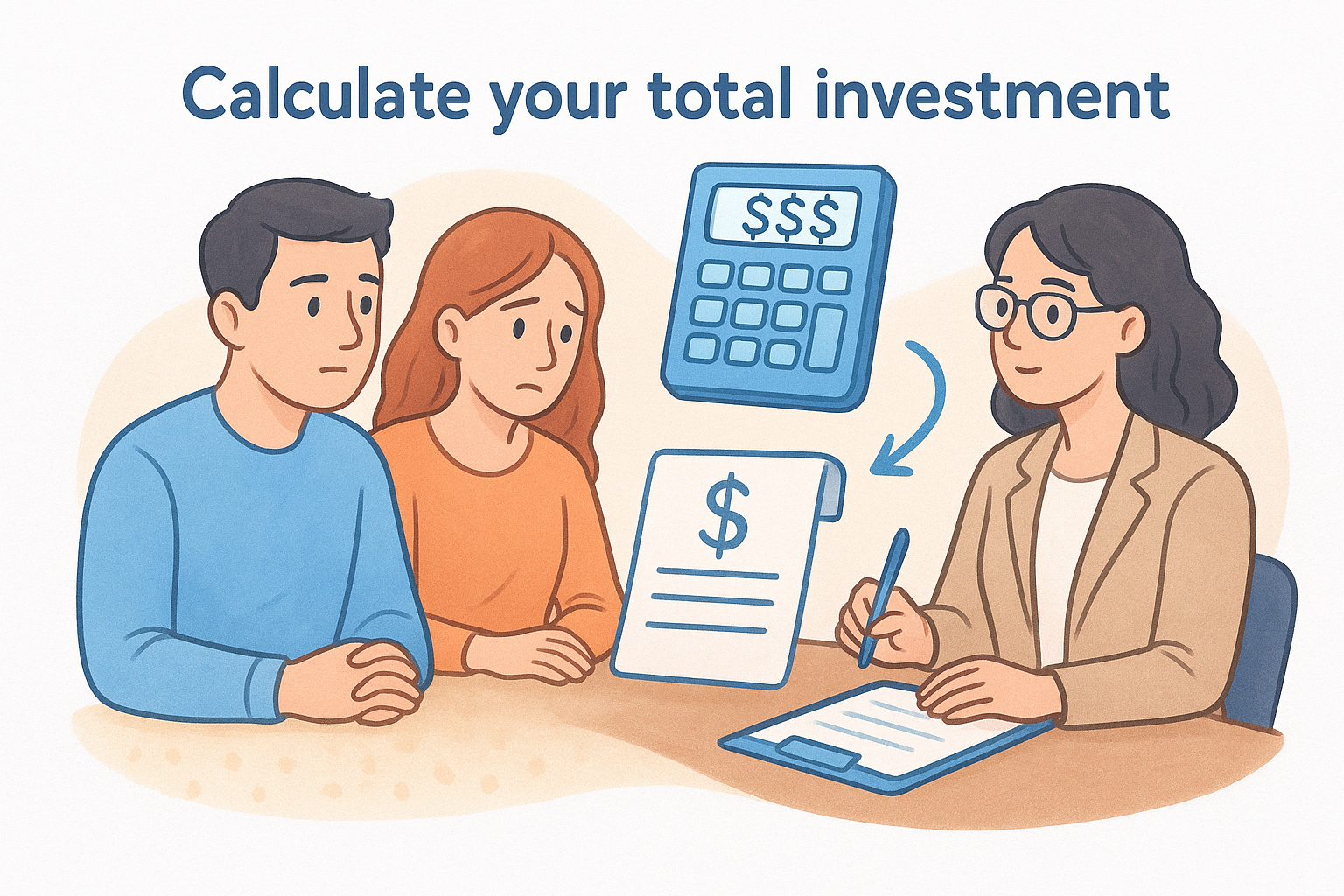
Relationship counseling typically costs $100 to $300 per session for a 50 to 90 minute appointment, with higher fees in major metropolitan areas and for specialists with advanced certifications. Multiply the per-session rate by the number of sessions you anticipate attending (most couples commit to at least 8 to 12 sessions initially) to calculate your total investment. Factor in whether the therapist offers sliding scale fees based on income or package pricing that reduces the per-session cost.
Calculate your estimated cost:
- Average session fee: $______
- Expected frequency: ____ sessions per month
- Monthly cost: $______
- Total for 3 months (12 sessions): $______
Ask whether therapists accept payment plans or offer reduced fees for financial hardship. Some practitioners provide a limited number of sliding scale spots while others maintain fixed pricing. Virtual sessions sometimes cost less than in-person appointments, though this varies by provider.
Navigate insurance coverage
Contact your insurance company to verify mental health benefits and obtain a list of in-network providers before searching “relationship counseling near me” through their directory. Ask specifically about couples therapy coverage, as some plans cover individual therapy but exclude relationship counseling or limit reimbursement for marriage and family therapy services. Request details about your copay amount, deductible requirements, and annual session limits.
Confirm whether the therapist bills insurance directly or requires you to submit claims for reimbursement yourself. Out-of-network providers might still qualify for partial reimbursement if your plan includes out-of-network benefits, typically covering 50 to 80 percent of their contracted rate after you meet a higher deductible.
Understanding your actual out-of-pocket costs prevents financial surprises that could force you to discontinue treatment prematurely.
Evaluate scheduling and location options
Review each therapist’s availability against your schedule constraints. Determine whether they offer evening or weekend appointments if you work standard business hours. Check their cancellation policy, particularly how much notice you need to provide to avoid charges (typically 24 to 48 hours). Consider commute time to in-person offices or whether virtual sessions through secure video platforms work better for your lifestyle and privacy needs.
Step 5. Contact providers and book the first appointment
After comparing your shortlist of counselors, you’re ready to make contact and schedule initial consultations. Most therapists offer brief phone or video conversations (typically 10 to 20 minutes) at no charge to determine if they’re a good fit for your needs. You want to reach out to three to five providers rather than committing to the first person who responds, as this gives you options and helps you compare communication styles before making your final choice.
Prepare your initial contact message
Draft a brief message introducing yourself and explaining why you’re searching for “relationship counseling near me.” Include the primary concern you want to address (communication breakdown, trust issues, premarital preparation), how long you’ve been experiencing this challenge, and whether both partners will attend sessions. Mention your preferred session format (in-person or virtual) and any scheduling constraints like needing evening or weekend appointments.
Use this template as your starting point:
Subject: Inquiry about couples therapy availability
Hello [Therapist Name],
I found your profile through [directory/referral source] and noticed your experience with [specific specialty]. My partner and I are seeking help with [primary concern], which has been affecting our relationship for [timeframe].
We’re looking for [in-person/virtual] sessions and have availability [days/times]. Do you currently have openings for new couples? If so, would you be available for a brief consultation to discuss whether your approach might be a good fit?
Thank you,
[Your Name]
[Phone Number]
What to ask during the initial consultation
When therapists respond, schedule phone consultations to assess their communication style and gather important details. Ask directly about their experience treating concerns similar to yours and request specific examples of how they approach those issues. Confirm their therapy method (Gottman, EFT, CBT) and whether they assign homework between sessions or focus exclusively on in-session work.
Inquire about their typical treatment timeline and how they measure progress. Determine whether they see both partners together for all sessions or incorporate individual meetings. Ask how they handle situations where one partner seems more invested in therapy than the other, as this reveals their conflict management approach and ability to maintain neutrality.
Therapists who answer your questions clearly and help you feel heard during consultations typically maintain that same communication quality throughout treatment.
Schedule your first session
Book your initial appointment with the therapist who best addressed your concerns, accepted your insurance or worked within your budget, and made you feel comfortable asking questions. Most first sessions last 75 to 90 minutes and involve completing intake paperwork, discussing your relationship history, and establishing treatment goals together with your counselor.
Know the red flags and when to seek different help
Not every counselor you find through searching “relationship counseling near me” will meet your needs, and some situations require different types of support entirely. Recognizing when therapy isn’t working or when your circumstances need specialized intervention prevents you from wasting time and money on ineffective treatment. You deserve a therapeutic relationship that feels safe, respectful, and productive, so knowing what to watch for protects your investment and your wellbeing.
Warning signs your current therapist isn’t working
Stop attending if your counselor takes sides consistently, validates only one partner’s perspective, or makes you feel attacked during sessions. Effective therapists maintain neutrality and help both people feel heard, even when addressing harmful behaviors. Watch for counselors who seem distracted, check their phone, or fail to remember important details you’ve shared in previous appointments.
Your therapist should never breach confidentiality by discussing your case inappropriately, pressure you toward specific decisions like staying together or divorcing, or impose their personal values about relationships onto your situation. Terminate treatment immediately if any counselor makes romantic or sexual advances, as this violates ethical standards and causes significant harm.
If you feel worse after several sessions without any improvement in your relationship skills or understanding, the therapeutic approach likely isn’t matching your needs.
Lack of progress after eight to twelve sessions suggests either a poor fit or a need for different treatment methods. Discuss this directly with your counselor before switching providers, as they might adjust their approach or refer you to someone better suited to your situation.
When individual therapy serves you better
Some relationship problems stem from personal issues that require individual work before or alongside couples therapy. You benefit more from one-on-one counseling if you’re experiencing depression, anxiety, trauma symptoms, or substance use issues that significantly impact your functioning. Unresolved childhood wounds or attachment injuries often need individual processing before you can engage productively in relationship work.
Consider individual therapy when your partner refuses to attend couples sessions but you want professional support navigating the relationship. Solo counseling helps you develop boundary-setting skills, process your emotions, and decide whether staying in the relationship serves your wellbeing.
Crisis situations requiring immediate intervention
Seek emergency help instead of scheduling regular counseling appointments if you or your partner experience thoughts of suicide, plans to harm yourself or others, or active psychosis. Contact the 988 Suicide and Crisis Lifeline or visit your nearest emergency room for immediate psychiatric evaluation.
Domestic violence requires specialized intervention beyond standard relationship counseling, as couples therapy can escalate danger in abusive situations. Contact the National Domestic Violence Hotline (1-800-799-7233) for resources, safety planning, and referrals to trauma-informed individual therapists who understand abuse dynamics.
Severe substance abuse or active addiction needs treatment from addiction specialists before relationship work becomes effective. Look for therapists certified in substance abuse counseling or contact SAMHSA’s National Helpline (1-800-662-4357) for treatment facility referrals in your area.
Your next step
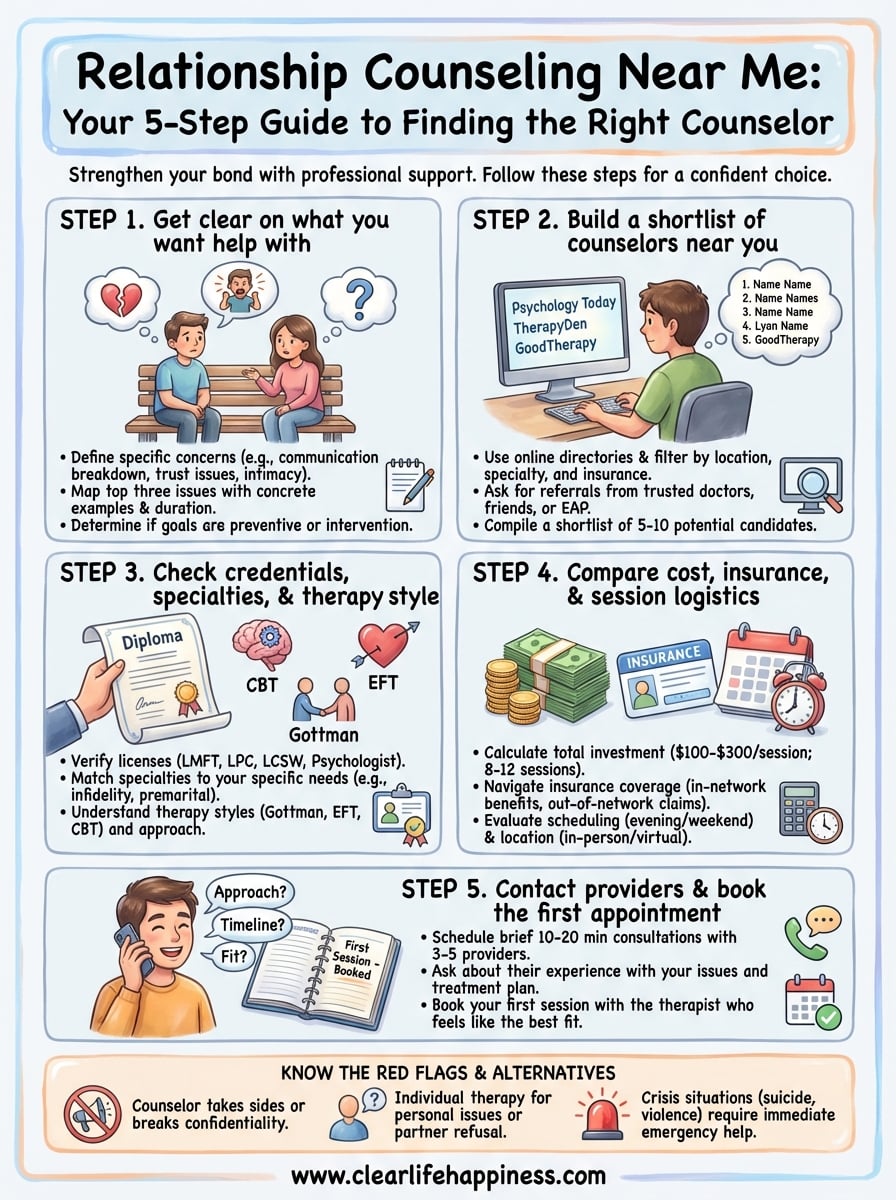
Finding the right counselor through searching “relationship counseling near me” requires deliberate effort, but the process becomes straightforward when you follow these five steps systematically. You’ve learned to clarify your specific concerns, build a shortlist of qualified providers, verify credentials and specialties, compare practical logistics, and conduct consultations before committing to treatment.
Your relationship deserves the same careful attention you give to other important decisions in your life. Take action today by contacting three to five therapists from your shortlist and scheduling initial consultations. The investment you make in professional support now prevents small problems from becoming irreparable damage later.
Beyond counseling, strengthening your relationship requires ongoing education about communication patterns, emotional intelligence, and conflict resolution. Explore our relationship resources at Clear Life Happiness for evidence-based articles that complement your therapy work and help you build lasting connection with your partner.

